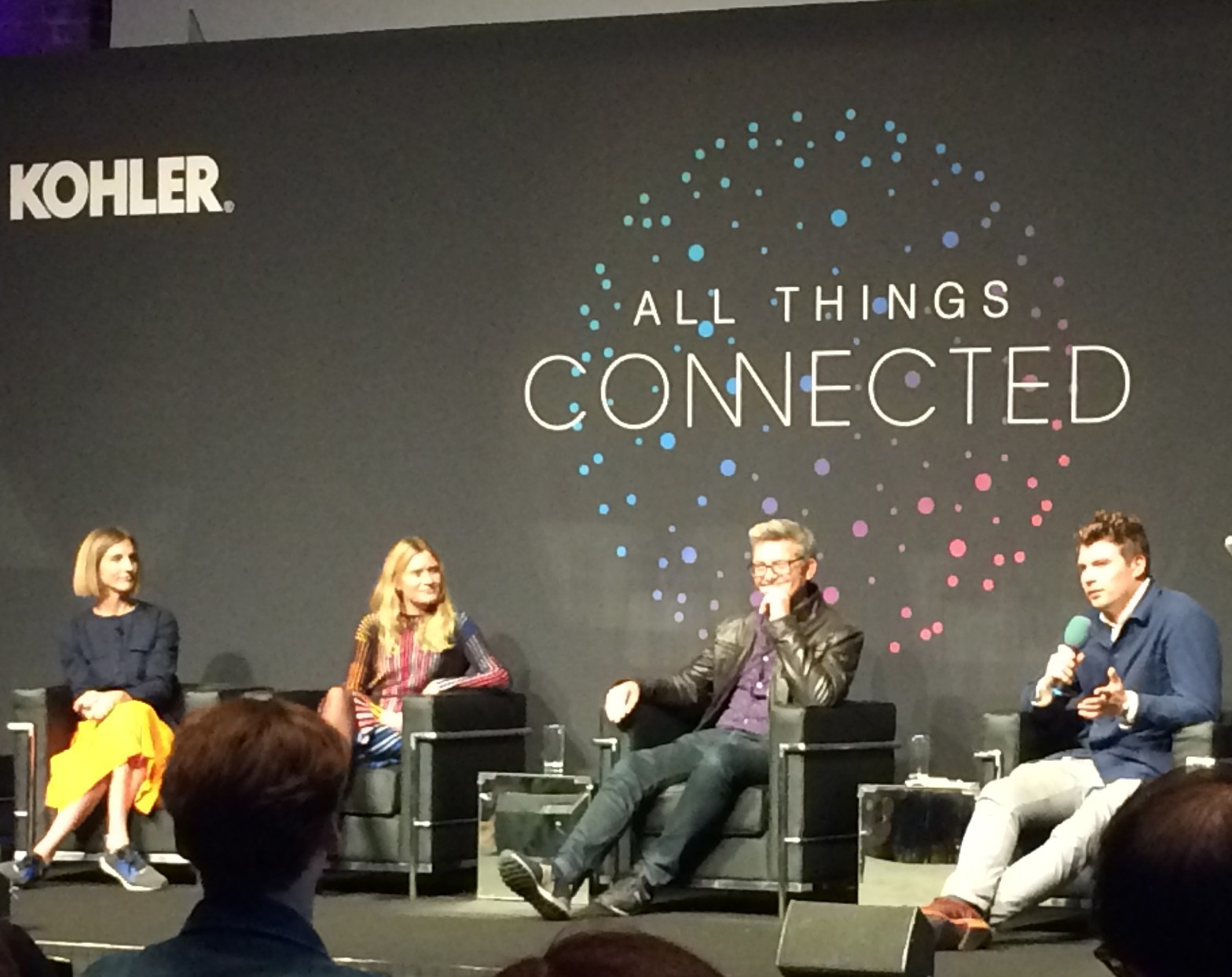
This year’s London Kohler Design Forum explored the subject of new technology. The Kohler Design Forum is one of the most eagerly anticipated parts of the London Design Festival.
Ron Bakker (PLP Architects), discussed architecture and using technology to bring people together. The Edge in Amsterdam was once named the greenest building in the world. The building is suffused with technology to help people make the most of their space and to work together. Although technology defines the building, the most powerful tool to bring people together is the large but cosy atrium. Deloittes have told Ron that they loved the fact that the building was full of new technology for the first three months but after that they loved the atrium. The technology has merged into the background and become invisible.
Allison Dring is founder of the start ups Elegant Embellishments and Made of Air. She described how her company has responded to construction demands and sustainability. Elegant Embellishments sells a structured panelling which takes in pollution from local environment. This makes cities healthier and more liveable. Humanity is on a timebomb and need to make sure that their impact on the environment is minimal. Her second company Made of Air produces building materials from Carbon Dioxide. This means it has a negative carbon footprint. It has been estimated that building houses for the growing population will exceed levels set by the Paris Accords. Using Carbon Negative building materials will lessen this impact and maybe even keep humanity going.
Runa Sabroe, Programme Director of the Danish Design Centre spoke of user centric design. The Danish Government has a business positive approach to design. She discussed projects that supported communities in Copenhagen. This has made Copenhagen one of the world’s most liveable cities. Rather than defining projects from tech, she said it is important to start with people.
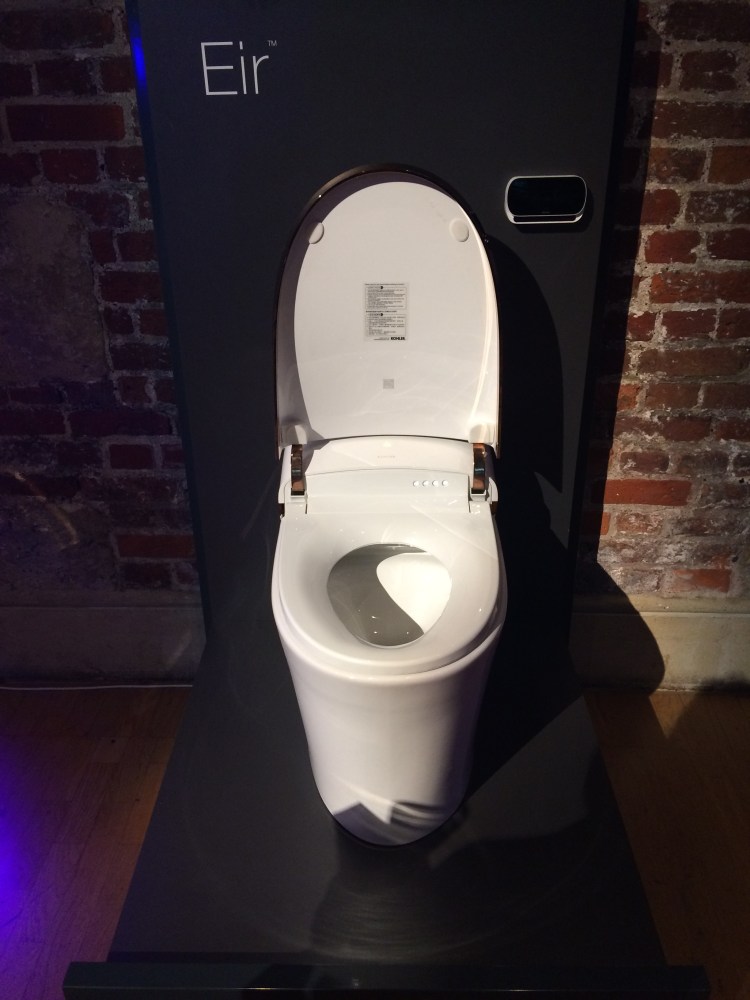
Mark Bickerstaffe from Kohler discussed how a Kohler customer engages with bathroom technology. At the start of his talk the idea of the internet of things in the bathroom led to visions of rogue washlets hacked by cyber-terrorists. Bathroom tech will be more likely to learn and remember preferred morning and bathroom routines and uses sensors to reserve energy. Taking the audience through Kohler’s journey mapping showed where potential opportunities arise for well crafted tech to support luxurious lifestyles.
The talks concluded with questions.
Tech and user centred communities
The London Kohler Design Forum was great. It showed how technology can be at the forefront of crucial future developments. It did not hide away from the fact that this is not always the case.
For me, some issues remained unresolved. Whilst Runa discussed how elderly people engaged with tech in Copenhagen, in the hands of less capable planners technology can exclude people unable to afford or use it.
The London Kohler Design Forum outlined how technology is being used to respond to real life problems faced by diverse communities around the world.
Ultimately tech driven by customers’ needs is underwritten by paying power, but some needs are not the needs of individual customers. For example, the environment or community health initiatives. There are also issues for individuals unable to afford expensive tech. Could technology be used in accessible bathrooms?
There is a growing need for an overarching body to financially support important processes and areas like this. In the absence of anyone else and so that we can hold such bodies accountable this power should be invested in democratically elected governments. We are at a crucial stage when decisions and actions need to be made now. The expertise and tech is there.

My take home from the London Kohler Design Forum was more a reflection after the great talks than anything said by the speakers. Technology can support future society but only if good UX principles are followed and support is levered by a social conscientious government willing to invest.
 Simon Bralee